Introduction
There is an old rule in the barcoding industry: internal use and external use are not the same thing at all.
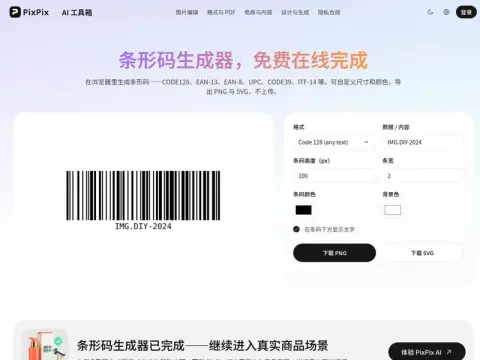
For warehouse management, asset tags, and internal documents, just choose CODE128. It can be programmed with letters and numbers, and the length is flexible. It is the most worry-free default option. Only when you have a formally applied for GS1 product number and want to enter the retail channel, will it be the turn of EAN-13 and UPC - these two numbers are globally registered. You can make up a string of numbers and print them with enough digits. You can scan it out, but you can't enter any formal channels. ITF-14 is used for outer packaging and is specially used for Pharmacode medicine. The tool supports a total of nine types: CODE128, EAN-13, EAN-8, UPC, CODE39, ITF-14, MSI, Pharmacode, and Codabar. It verifies the digits and characters in real time when inputting, and stops illegal ones on the spot.
The easiest things to fail in the printing process are quiet zones and stretching. The blank space on the left and right sides is the basis for the scanner to determine the starting and ending position of the code. If it is cut off or occupied by other patterns, it cannot be read. If the barcode is pulled horizontally and vertically for typesetting, the entire code will become useless once the bar width ratio changes. Print it out and check it with a real scanner, don't rely on the screen preview.
Export to PNG and SVG, SVG has the sharpest edges for label printing.
Related