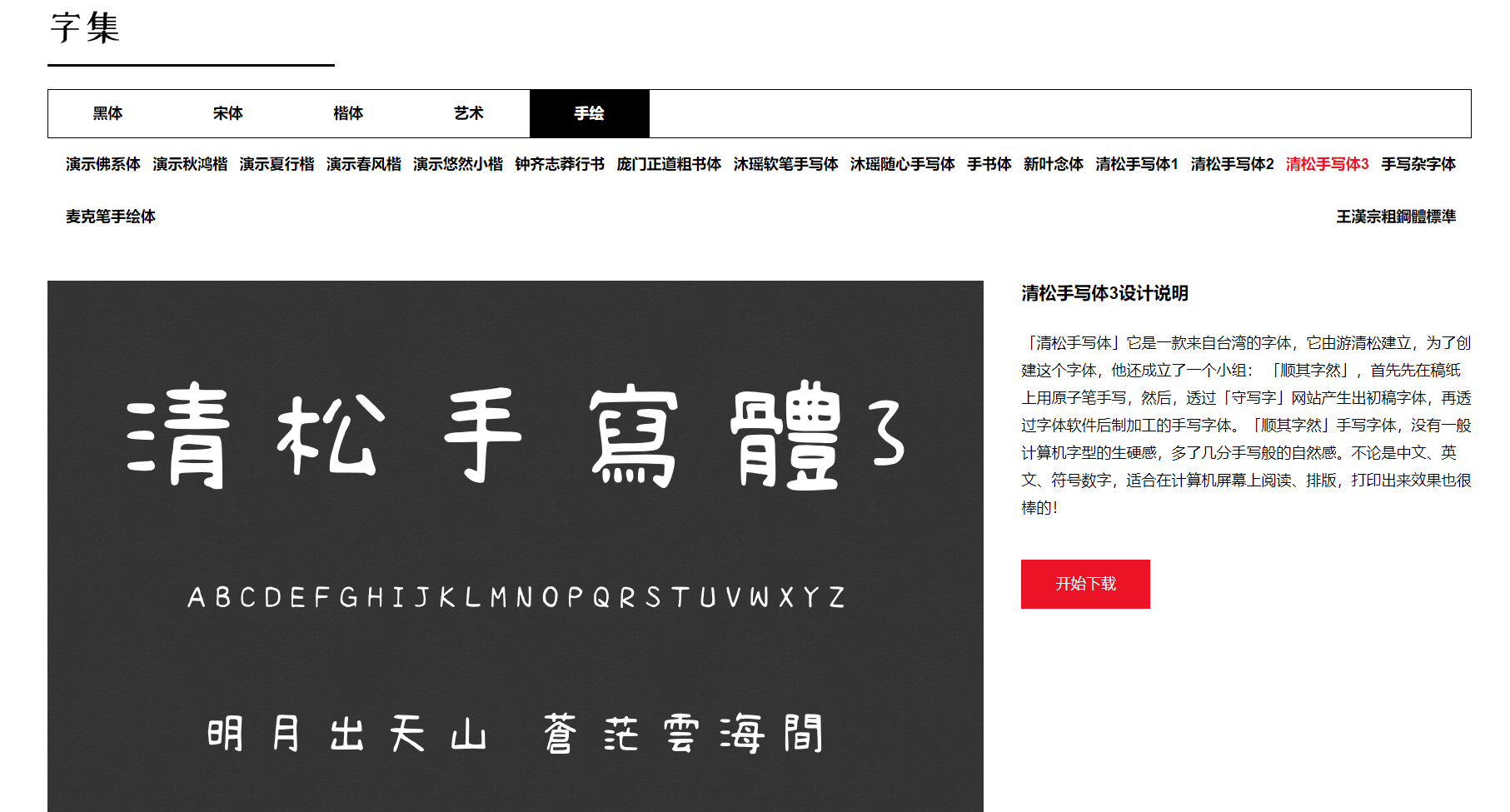
character set
FontSet is a free font download website that offers access to thousands of open-source, free font resources. The website features no advertisements and allows users to download fonts directly without the need to register or log in. Each font is accompanied by a preview and description, with a download button located immediately below the information section. (Some fonts may not have available download files.) It’s important to note the types of fonts available on this website.
Introduction
FontSet is a free font download website that offers access to thousands of open-source, free font resources. The site features no advertisements and allows users to download fonts directly without the need for registration or login. Each font is accompanied by a preview and description, with a download button available immediately following the introduction. (Some fonts may not have downloadable resources available.)
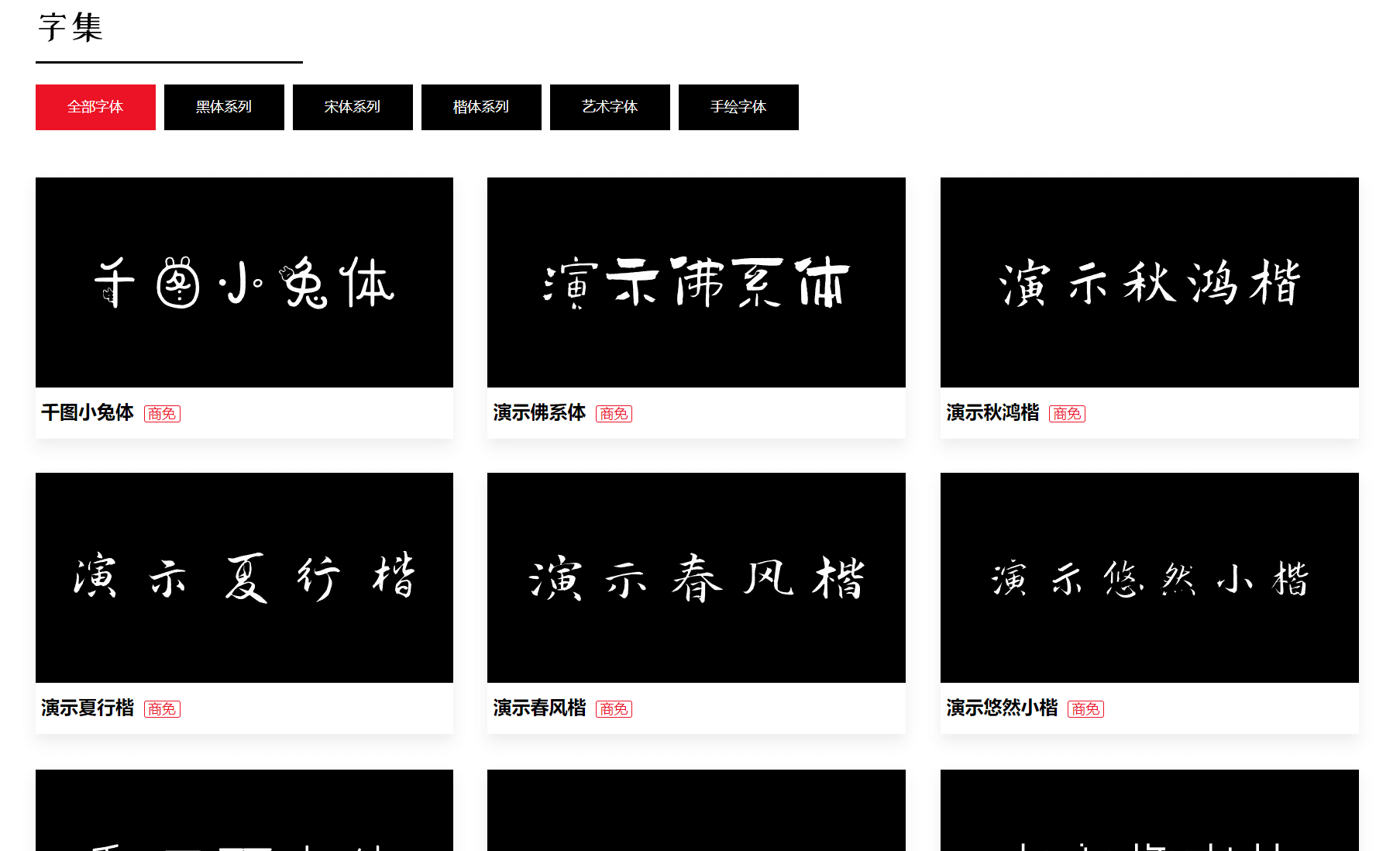
It should be noted that although all the fonts available on these websites are free to use, there are still certain differences regarding licensing: some free fonts are intended for commercial use only, while others are open-source. Even among free fonts suitable for commercial use, some may require additional authorization before they can be used. Open-source fonts, in turn, are governed by various licenses and terms of use; therefore, it is essential to carefully read these regulations before utilizing any of them.
Free commercial fonts
The concept of "commercial use for free" does not refer to an open-source licensing agreement. It primarily denotes fonts that are not open-sourced by their developers but are still provided freely for personal and commercial use. Currently, there is no unified standard regarding the copyright of Chinese fonts. Different font manufacturers impose varying restrictions on the free commercial use of their fonts; some require prior authorization from the manufacturer before such use is permitted. When utilizing such fonts, it is essential to carefully read the relevant terms to avoid unnecessary complications. However, when individual designers release fonts and explicitly promise their free commercial use, these restrictions generally do not apply.
Manufacturers have the right to retract the licenses for fonts that were previously available for free commercial use. There have been cases where manufacturers have revoked the licenses for such fonts. Before using any free commercial fonts released by manufacturers, it is necessary to verify whether those fonts are still available for public free commercial use. We will also make every effort to update the license information for such fonts in a timely manner.
Open-source fonts
The GNU General Public License (GPL-2.0) is a set of terms established by the GNU movement to ensure that its software remains open-source and freely distributable throughout its development. The most significant aspect of the GPL is that if you use software governed by this license in your own works, those works must also be distributed under the GPL. This raises an important question: if I use a GPL-licensed font in my documents, does that mean the entire document becomes open-source as well? There is no definitive answer to this question, and it has sparked considerable controversy. As a result, the GNU Foundation, the promoters of the GPL, introduced an additional clause called the “GPL Font Exception,” which can be attached to the license for GPL-licensed fonts to prevent their distribution in documents that use those fonts. Due to these controversies, the Wenquan font series included here should be used with caution.
The SIL Open Font License (OFL-1.1SIL) was established by the SIL International and was first released in 2005. Today, it has become the preferred licensing option for numerous open-source fonts. This license is more lenient than the GPL; it does not extend to works that utilize the SIL fonts themselves. Instead, it only requires that any modifications made to these fonts be distributed under the same license.
The IPA-1.0 License for IPA Open Font Files is a set of terms and conditions established by the Japanese organization “IPA” in order to comply with the open-source definition established by the Open Source Initiative in 2009.