Riddle Network
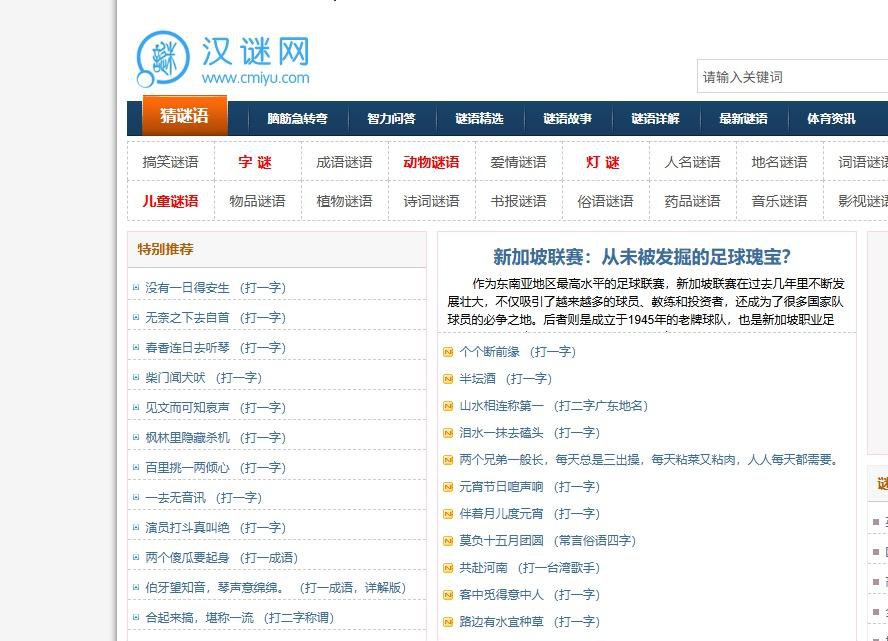
Riddle library, categorized into character riddles, idiom riddles, and place name riddles, with answers and explanations provided. Riddles represent the most ingenious form of entertainment in the Chinese language; a single character riddle often incorporates elements related to its form, pronunciation, and meaning.
Introduction
During the Spring Festival, when organizing activities like riddle-solving contests, or if you want to come up with a question for your children but can’t think of an appropriate riddle on the spot, here are some categories to help you: word puzzles, idiom puzzles, place name puzzles, and brain teasers. Each entry comes with the answer and an explanation.
The quality of these riddles varies greatly; many old riddles appear repeatedly, and some explanations only provide the final answer without explaining how to break them down. As a result, it’s still unclear why one should guess in a certain way after reading the explanation. The difficulty levels are poorly defined, with difficult and easy riddles mixed together. A more appropriate use of these riddles would be to copy a few of them and take them to event venues, or to use them as examples to understand how to analyze the structure, pronunciation, and meaning of a character-based riddle. If one wants to systematically learn about the various types of riddles, they should look for specialized books on this subject.